
As the early morning mist had yet to lift, Old Zhou stood at the site of a newly completed hotel project, watching workers carefully carry an engineered stone bathtub into a suite. He reached out and ran his hand along the edge of the bathtub; it felt warm to the touch—neither as cold as ceramic nor as rough as inferior materials. This was the intuition he’d honed over more than a decade in the bathroom fixtures industry—you can tell a quality product the moment you touch it. But just three years ago, he’d been struggling with another batch of products. Those bathtubs, purchased through low-cost channels, began to show discoloration, yellowing, and even fine surface cracks within less than half a year, prompting the hotel management to demand a complete replacement. That lesson taught him that behind stain resistance and durability lies a battle of formulations and craftsmanship—the genuine expertise a manufacturer has honed over more than a decade.
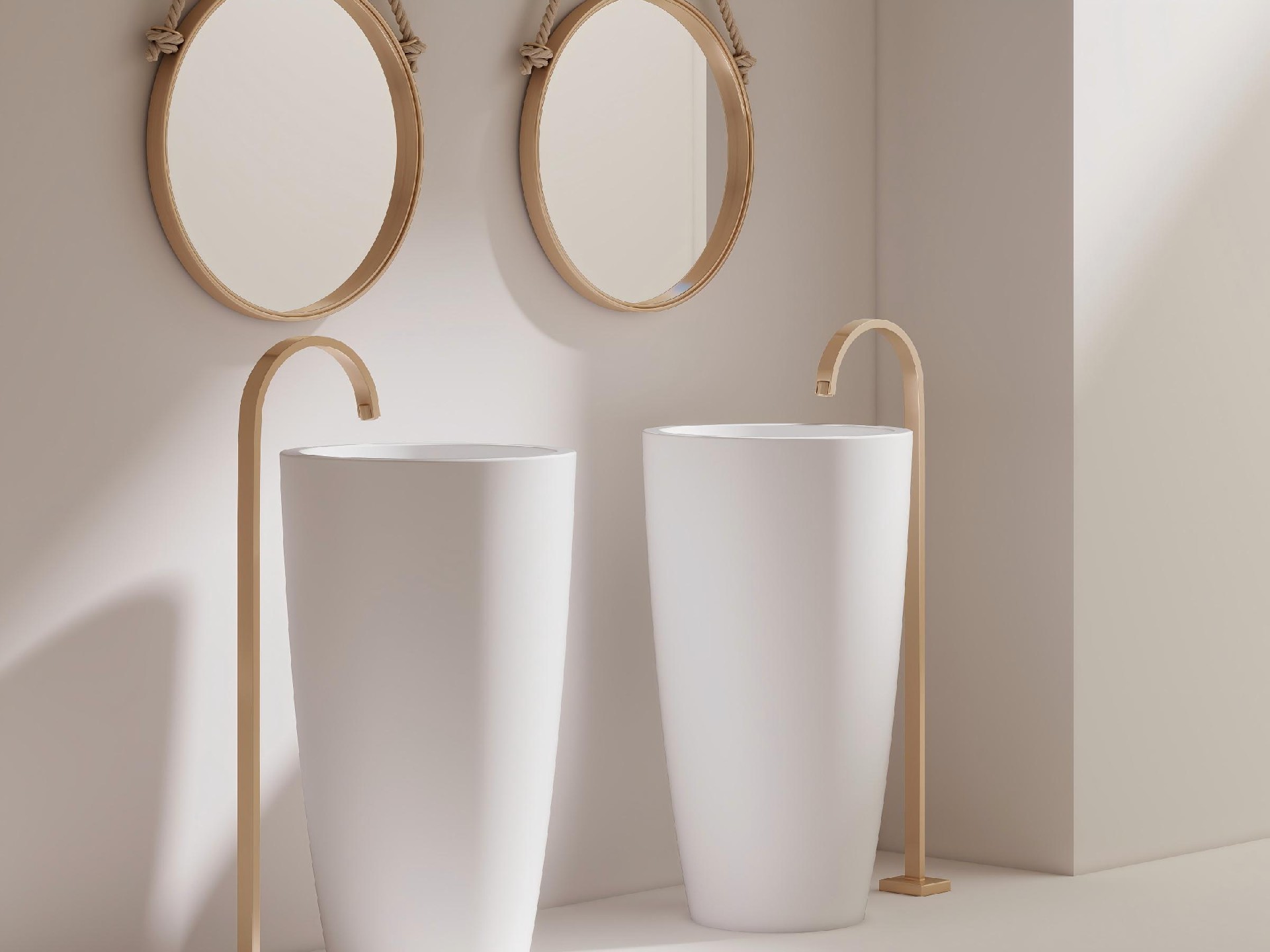
In the industry, engineered stone bathtubs are nothing new. But those that can truly stand the test of time and remain consistent in the humid bathroom environment are few and far between. Some manufacturers, in an effort to cut costs, substitute calcium powder for aluminum powder; the finished product may look glossy at first, but its true nature is revealed before it’s even worn out; other manufacturers, chasing short-term orders, neglect formulation stability, resulting in noticeable color variations between batches—a major headache for buyers. What users truly need isn’t a pretty ornament, but a reliable product that will last ten or twenty years—one that never yellows, doesn’t bleed color, and is easy to maintain. This need is particularly urgent in hotels, vacation rentals, and high-end residential projects, because every rework and every customer complaint translates into real financial losses.
Stain resistance may sound simple, but achieving it requires mastering countless details.
Even the slightest deviation in the ratio of resin to aluminum powder can result in a dramatic difference in the finished product’s density; the slightest fluctuation in mold temperature control can cause microscopic pores—invisible to the naked eye—to appear on the surface, and these pores are precisely the culprits behind future color bleeding. Jingzun’s R&D team treats every raw material with the same care as a jade artisan, establishing standardized operating procedures for every stage—from raw material selection to mixing and degassing, and from pouring and curing to surface polishing. They do not prioritize speed; instead, they ensure that every product leaving the factory can withstand scrutiny under a magnifying glass.
If the formula is the soul of the product, then the manufacturing process is the skeleton that supports that soul.
Jingzun fully understands that engineered stone bathtubs differ from ordinary ceramic products; they have stringent requirements regarding temperature, humidity, and handling techniques. Excessive humidity in summer or excessive dryness in winter can both compromise the curing process. To provide a stable environment for product manufacturing, Jingzun relocated in 2016 to Boluo, Huizhou, simultaneously completing an upgrade to green production. In the standardized, eco-friendly workshop, a constant temperature and humidity control system ensures that every bathtub is formed under ideal conditions; A full suite of eco-friendly treatment equipment ensures that dust and exhaust gases generated during production are properly managed. This meticulous attention to detail may not be explicitly stated in the product manual, but users can feel it when using the product—the uniform, fine texture of the bathtub’s surface and its resilience against yellowing, no matter how often it’s used, stem precisely from this unseen craftsmanship.
In 2020, Jingzun took another significant step forward. The company introduced advanced Italian manufacturing techniques and focused its efforts on the transparent resin bathroom fixtures market. Unlike solid engineered stone, transparent resin is translucent and lightweight, capable of creating an ethereal and luxurious spatial effect; however, the requirements for formula purity and molding processes increase exponentially. Even a single speck of dust or a single air bubble mixed into the resin is magnified infinitely in a transparent material, becoming an undeniable flaw. Jingzun’s engineers treat every transparent resin bathtub with the same care as they would an optical lens—from filtering raw materials to vacuum degassing, and from slow pouring to meticulous polishing—striving for perfection at every step. In 2025, they collaborated with an Italian bathroom technology team to complete an iterative upgrade of the transparent resin formula, further optimizing the product’s transparency, toughness, and resistance to wear and weathering, while bringing the craftsmanship and texture up to international standards. This series of breakthroughs has enabled Jingzun to carve out a differentiated product line beyond traditional engineered stone, offering designers and high-end homeowners even more possibilities.
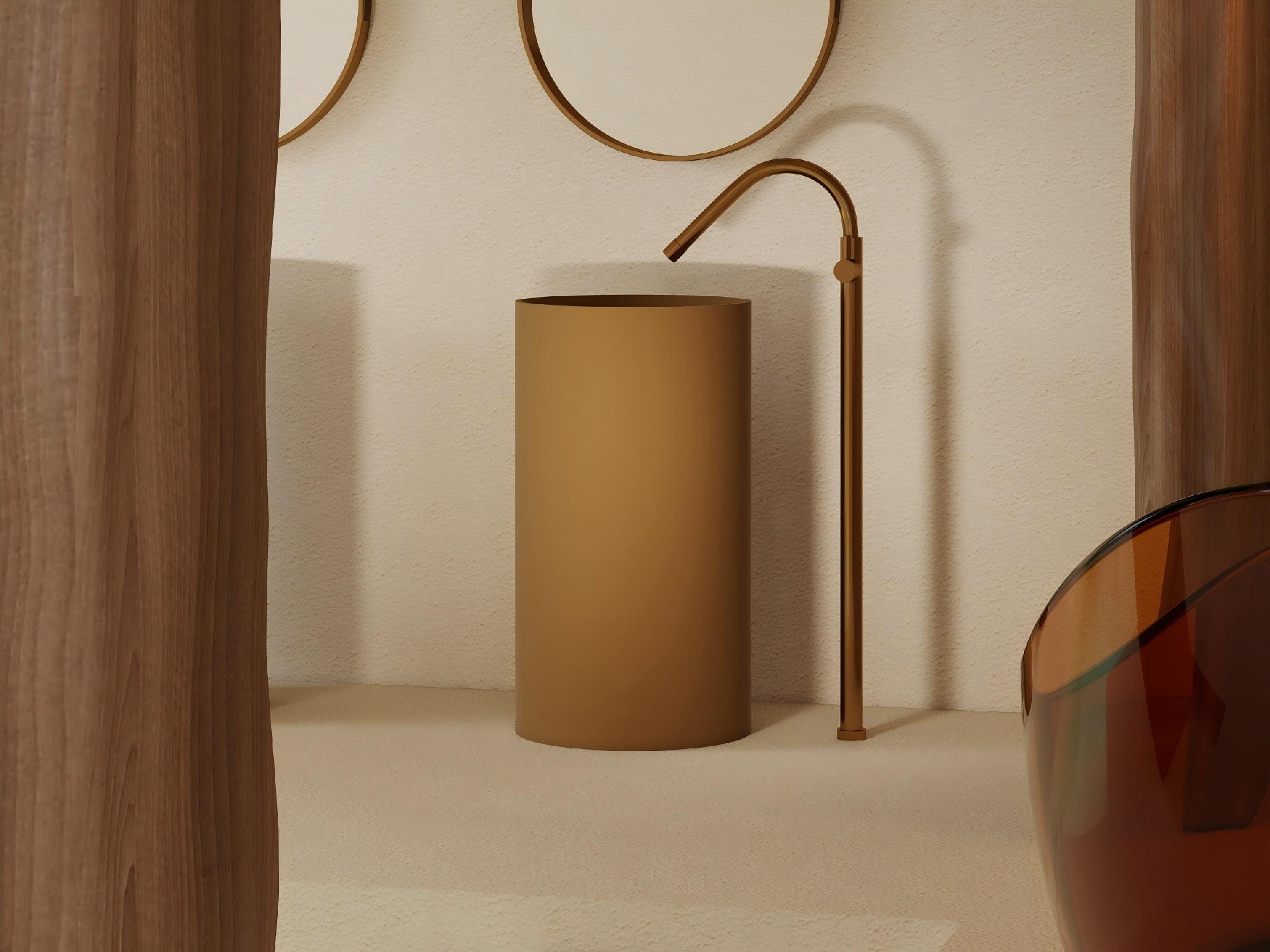
After more than a decade of dedicated development, Jingzun’s product line now encompasses the full range of engineered stone, composite acrylic, pure acrylic, and resin bathroom fixtures—from bathtubs, countertop basins, and pedestal sinks to countertop basins, shower pans, and seamless one-piece basins, as well as bathroom cabinets and various accessories. The comprehensive selection is sufficient to meet the procurement needs of a hotel project from start to finish. More importantly, all these products have passed rigorous third-party testing. EU CE certification, North American ICC-ES certification Solid product endorsements. In overseas markets, these certifications mean that products can be confidently used in engineering projects across Europe, North America, and Australia—without worrying about customs inspections or non-compliance with local building codes. In China, high-end projects such as the Beijing Langlizhi Xishan Garden Hotel, the Hangzhou Ruili Jianghehui Grand Hotel, and the Inter Continental Qianhu Lake Resort have all chosen Jingzun products. These tangible case studies are more persuasive than any advertisement.CE certification, and CUPC certification, along with materials that have passed SGS UV resistance and temperature variation tests—these are not merely decorations hung on the wall, but rather solid product endorsements. In overseas markets, these certifications mean that products can be confidently used in engineering projects across Europe, North America, and Australia—without worrying about customs inspections or non-compliance with local building codes. In China, high-end projects such as the Beijing Langlizhi Xishan Garden Hotel, the Hangzhou Ruili Jianghehui Grand Hotel, and the Inter Continental Qianhu Lake Resort have all chosen Jingzun products. These tangible case studies are more persuasive than any advertisement.