
In the design language of bathroom spaces, the choice of materials often determines the space’s texture and ambiance. I
n recent years, with the rise in popularity of minimalism and “light luxury” styles, transparent resin bathtubs—thanks to their translucent visual appeal and unique artistic forms—have gradually made their way from high-end hotels into ordinary households. At the same time, traditional acrylic bathtubs remain the absolute mainstay of the market. When making a purchase, many consumers often find themselves torn between the dreamy transparency of clear resin and the classic practicality of acrylic. As a source factory with years of deep expertise in the bathroom manufacturing sector, China Jingzun Bathroom Co., Ltd. will draw on over a decade of production experience to provide an in-depth analysis of the intrinsic differences between these two materials. We’ll also offer a practical guide to purchasing and technical insights to help you create your ideal bathroom space.
Although transparent resin bathtubs and acrylic bathtubs are both polymer materials, they have fundamental differences in their physical properties, manufacturing processes, and user experience.
Acrylic bathtubs, scientifically known as methyl methacrylate, offer the greatest advantages in terms of excellent ductility and impact resistance. They are suitable for hot thermoforming, allowing for the production of bathtubs with complex shapes and large dimensions at a relatively controllable cost. Transparent resin bathtubs, on the other hand, typically refer to those made with unsaturated polyester resin or acrylic resin as the matrix and formed through a casting and curing process. Their core appeal lies in their transparency and malleability. The technical team at Huizhou Jingzun Sanitary Ware Co., Ltd. points out that transparent resin bathtubs are not simply transparent versions of acrylic bathtubs; they are more like works of art designed for daily use. They demand extremely rigorous standards for material formulations and casting processes—and this is precisely where their value lies.
From te perspective of visual aesthetics and spatial design, transparent resin bathtubs offer advantages that acrylic bathtubs simply cannot match.
Acrylic bathtubs ae typically solid-colored or opaque pearlescent, and while they come in a wide range of colors, they appear rather heavy and tend to dominate the visual focus of the space. Transparent resin bathtubs, especially those with high transparency, can achieve a translucent texture similar to crystal or glass. As light passes through the bathtub walls, it creates soft refractions of light and shadow, greatly minimizing the bathtub’s perceived bulk. For small apartments or bathrooms with poor natural lighting, transparent resin bathtubs can create a visual illusion of expanded space, making the area feel lighter and more open.

In terms of physical properties and durability, the differences between the two materials are equally significant.
Acrylic bathtubs have a high surface hardness but only moderate scratch resistance; they are prone to scratches after prolonged use, which are particularly noticeable on light-colored surfaces. Transparent resin bathtubs are cast as a single piece, resulting in a higher material density. Their surfaces undergo a special curing process, giving them excellent scratch resistance. More importantly, high-quality transparent resin is treated to resist UV rays, effectively preventing yellowing and clouding caused by prolonged exposure to sunlight and hot water.
Textural feel and heat retention are also key factors that distinguish the user experience between the two materials.
Acrylic bathtubs have a low thermal conductivity and feel warm to the touch, which is a major selling point that sets them apart from ceramic bathtubs. Transparent resin bathtubs share this characteristic, and because the material is denser, their surfaces feel even finer and smoother—as warm and smooth as jade. In terms of heat retention, transparent resin bathtubs typically have thicker walls than standard acrylic bathtubs, allowing them to maintain water temperature for longer periods and providing a more comfortable and energy-efficient bathing experience.
When it comes to personalized customization and artistic design, transparent resin bathtubs demonstrate an overwhelming advantage.
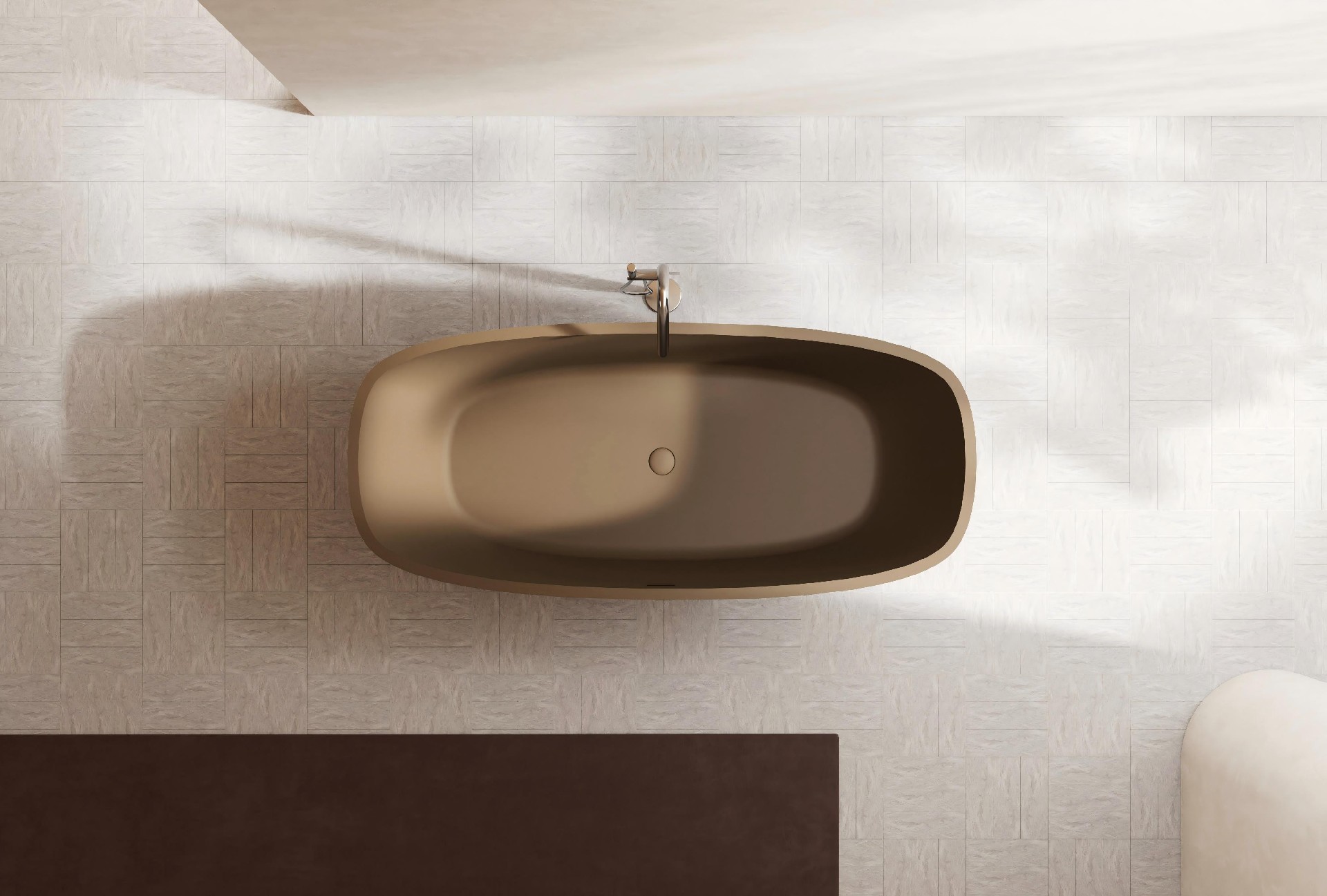
Although the vacuum-forming process used for acrylic bathtubs can produce some curved shapes, it has limitations in terms of detail rendering and the creation of irregular forms. Transparent resin, on the other hand, uses a casting process that can realize virtually any imaginable shape. Whether it’s a flowing oval, a minimalist square, a petal shape brimming with natural rhythm, organic curves, or even a built-in, one-piece bathtub, transparent resin can be cast as a single, seamless unit without any joints. Furthermore, transparent resin offers greater flexibility in color customization. It can be not only pure and fully transparent but also blended with color pigments to create sophisticated translucent shades such as tea brown, amber, light gray, and smoky gray, meeting the personalized needs of various interior design styles. As a source manufacturer, Huizhou Jingzun Sanitary Ware Co., Ltd. is able to provide customers with end-to-end customization services—from blueprints to finished products—an advantage that ordinary, off-the-shelf acrylic bathtubs simply cannot match.
When it comes to installation and maintenance, consumers need to understand the practical differences between the two materials.
Acrylic bathtubs are relatively lightweight, making them easier to transport and install, and they do not place high demands on floor load-bearing capacity. Transparent resin bathtubs, on the other hand, are significantly heavier due to the material’s high density and thicker walls. While this provides a solid feel and excellent sound insulation, it also places higher demands on transportation and installation, requiring an advance assessment of the bathroom floor’s load-bearing capacity. In terms of cleaning and maintenance, both types should avoid the use of strong acids, strong alkalis, or cleaning agents containing abrasive particles. If scratches appear on the surface of a Keli bathtub, they can be repaired through polishing; daily cleaning of a transparent resin bathtub is simpler, requiring only a neutral cleaner and a soft cloth. It is particularly important to note that transparent resin bathtubs should avoid prolonged contact with substances prone to staining—such as hair dye or dark-colored essential oils—to prevent pigment penetration. Huizhou Jingzun Sanitary Ware Co., Ltd. reminds consumers that while enjoying the visual appeal of transparent resin bathtubs, they must also follow specific maintenance requirements to ensure they remain as good as new for years to come.
So, when faced with these two materials, how should consumers make their choice?
It mainly depends on your core needs and budget. If you’re looking for exceptional value for money, a wide range of color options, and a lightweight installation experience—and aren’t particularly concerned about the bathtub’s unique design—then a high-quality acrylic bathtub remains a proven and reliable choice. However, if you’re a consumer who values the aesthetics of daily life, appreciates minimalist and transparent design, wants your bathroom to be the visual focal point of your home, and is willing to invest more in that artistic flair and uniqueness, then a transparent resin bathtub is undoubtedly the choice that best showcases your taste.
When selecting bathroom products, having access to balanced information is essential for making the right decision. The choice between transparent resin bathtubs and acrylic bathtubs is not simply a matter of which is better or worse; rather, they embody two distinct design philosophies and user experience orientations. Transparent resin bathtubs represent the bathroom industry’s trend toward artistic and personalized design, while acrylic bathtubs continue to serve the mass market with their proven, reliable performance. Regardless of which option you prefer, understanding the technical principles and product characteristics behind them is crucial. Choosing the right material is not merely about adding a piece of bathroom fixtures—it’s about selecting the perfect sensory experience for your daily life.